Osteoporosis, the silent bone thief, reduces your bones’ density, making them more fragile and prone to fractures. It primarily affects the aging population, particularly postmenopausal women. Early diagnosis, treatment, and maintaining a healthy lifestyle can help prevent further bone loss and strengthen weak bones.
Medical Disclaimer: The information provided in this article is for educational purposes only and should not be taken as professional medical advice. Always consult with a qualified healthcare provider regarding any medical condition or treatment.
What is Osteoporosis?
Osteoporosis is a chronic condition that impacts bone density. Bones become less dense, thinner, more fragile, and more prone to breaking. Bones are living tissues; they are always in a process of formation. There is a balance between new bone formation and the removal of old bone to maintain density and strength. Osteoporosis disrupts this balance, leading to more bone removal than formation. Bones develop holes in their structure. The medical term for reduced bone density is Osteopenia. Osteopenia is an early indicator of Osteoporosis; if left untreated, it can progress to Osteoporosis.
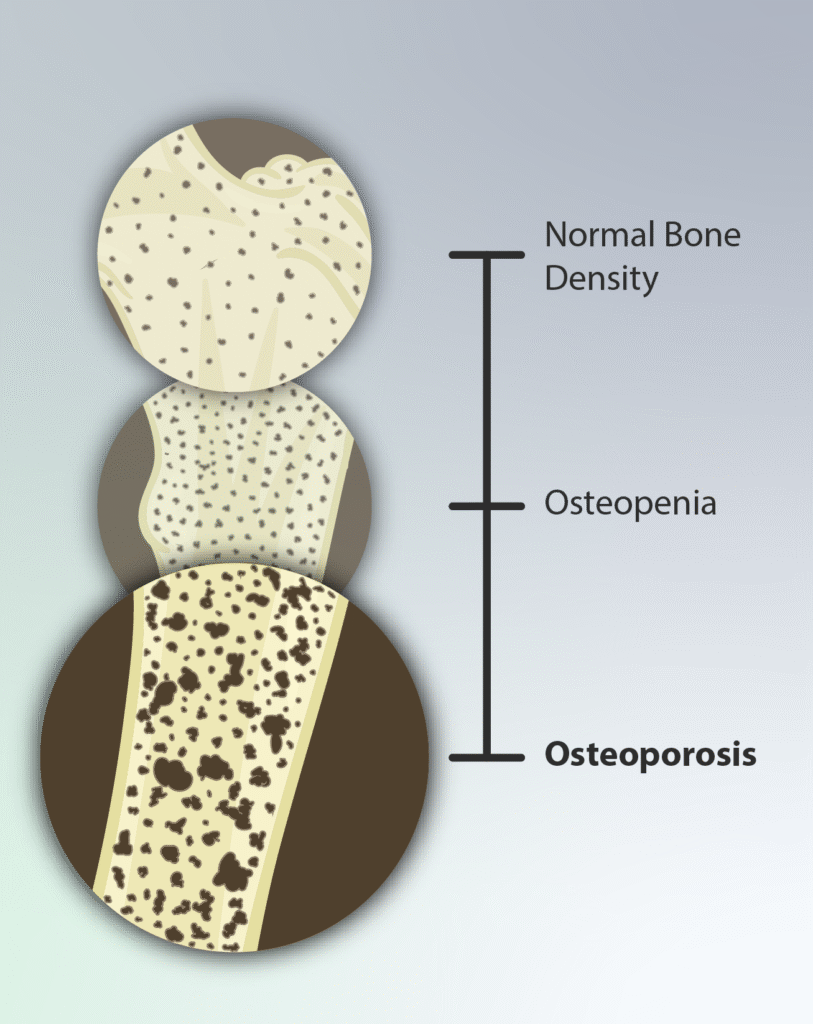
Figure 1. Understanding Bone Density Levels. This diagram shows how bone becomes more porous as it progresses from healthy bone to Osteoporosis. Adapted from original by myUpchar, via Wikimedia Commons, (CC BY-SA 4.0) https://commons.wikimedia.org/wiki/File:Depiction_of_an_Osteoporosis_patient.png

What causes Osteoporosis?
Osteoporosis occurs when the formation of new bone can’t keep up with the removal of old bone.
Many factors can cause Osteoporosis:
- Hormonal changes in postmenopausal women. The estrogen level, which is essential for maintaining bone density, drops, leading to increased bone loss. Men over 70 experience a decline in testosterone levels, leading to bone loss.
- Family history and genetics
- Nutritional deficiencies, such as low calcium and vitamin D intake
- Smoking and alcohol misuse
- Lack of physical activity
- Medical conditions like rheumatoid arthritis, celiac disease, and hormonal disorders
- Certain medications, like corticosteroids and diuretics
Diagnosis and treatments
Osteoporosis is a silent disease; it doesn’t show symptoms until you break a bone. As the condition progresses, you may experience common symptoms such as:
- Back pain
- Loss of height
- Stooped posture
- Bone fractures from minor injuries.
Osteoporosis is diagnosed with a bone density scan, known as a bone mineral density (BMD) or DEXA scan. BMD is an imaging test that assesses bone strength by using X-rays to measure calcium and other minerals in your bones.
Prevention is key
You can prevent the condition and fracture by:
- Eating a healthy diet rich in calcium and vitamin D
- Staying physically active
- Avoiding smoking
- Limiting alcohol consumption
- Maintaining a healthy weight
- Having regular check-ups if at risk
Living Well with Osteoporosis
Osteoporosis is a chronic condition that requires lifelong management. Although there is no cure for Osteoporosis, you can control your symptoms through medication and lifestyle adjustments.
The treatment plan includes:
- A combination of medications to slow down bone loss and strengthen your bones.
- Regular weight-bearing exercise can help strengthen muscles and improve balance.
- Vitamins and mineral supplements such as vitamin D and calcium.
Final thoughts
Osteoporosis is one of the most common bone diseases, leading to fractures and other complications. We can prevent and manage Osteoporosis by educating people about this condition. Taking steps towards prevention through a balanced diet, regular exercise, and check-ups is essential.
Prioritise your bone health today to enjoy an active, healthy lifestyle and reduce the risk of fractures in the future.
To know more about Osteoporosis:
References:
- Sekiya K. Understanding Osteoporosis: Causes, Symptoms, Prevention, and Treatment.
- Healthdirect Australia. Osteoporosis. Healthdirect. Published April 2, 2025. Accessed July 14, 2025. https://www.healthdirect.gov.au/osteoporosis
- Cleveland Clinic. Osteopenia: what is it, symptoms, causes & treatment. Cleveland Clinic. Accessed July 30, 2025. https://my.clevelandclinic.org/health/diseases/21855-osteopenia
- Cleveland Clinic. Osteoporosis: symptoms, causes, tests & treatment. Cleveland Clinic. Accessed July 14, 2025. https://my.clevelandclinic.org/health/diseases/4443-osteoporosis

As a Medical Writer and patient education specialist with a Bachelor of Medical Science (BMedSc), I am dedicated to turning complex research into actionable, easy-to-understand health guides.